
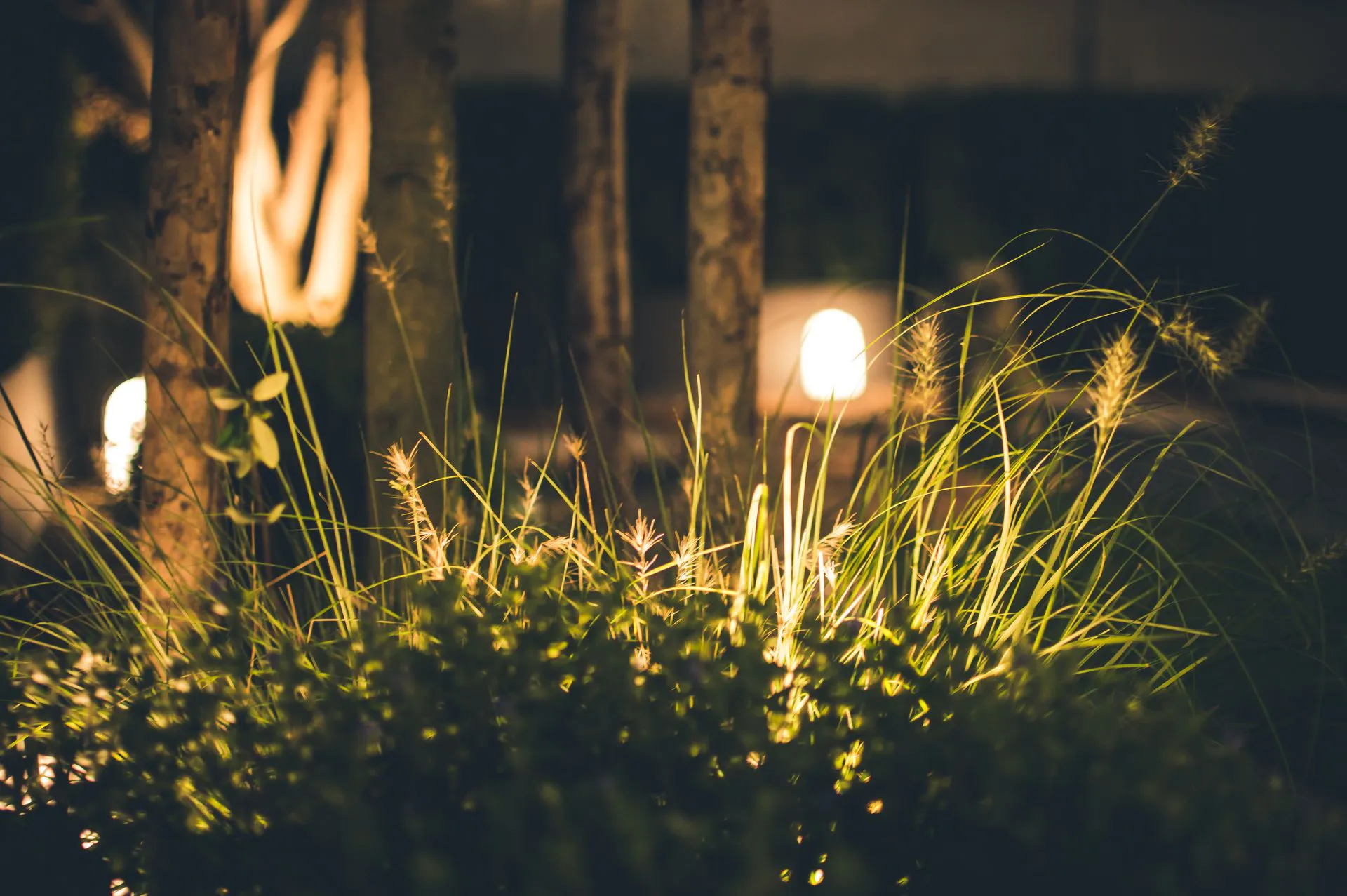
Color Temperature Explorer
Slide from candle-warm 2200K to cool 5000K and see which light color flatters brick, stone, foliage and water.
What color temperature means
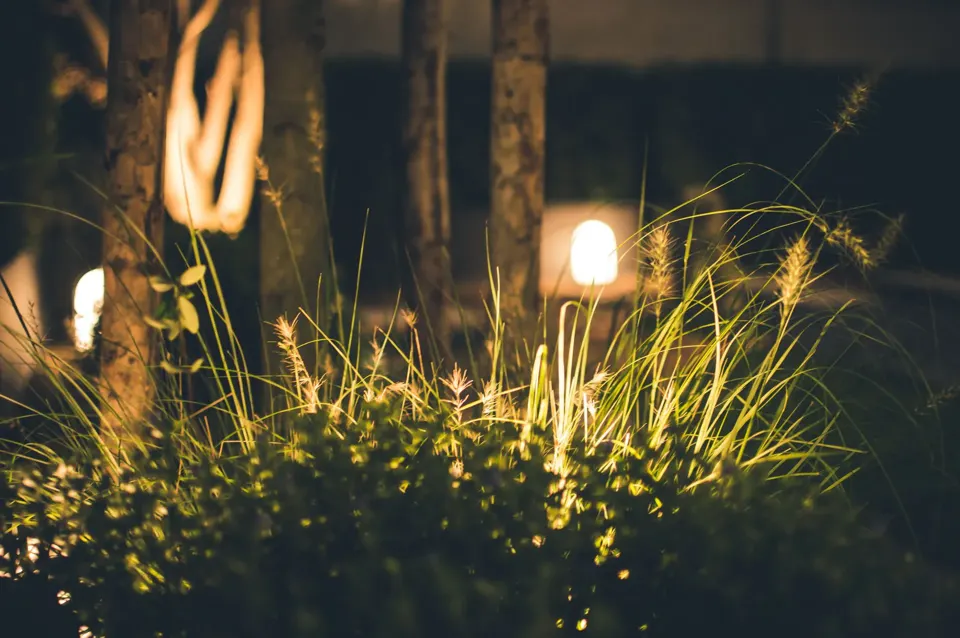
Color temperature, measured in Kelvin (K), describes how warm or cool white light looks. Lower numbers glow amber like candlelight; higher numbers look blue-white like daylight.
| Kelvin | Look | Best for |
|---|---|---|
| 2200K | Amber, candle-like | String lights, historic or rustic settings, red brick |
| 2700K | Warm white | Most homes: brick, warm stone, wood, entries |
| 3000K | Soft white | Limestone, light stucco, many trees and full-property designs |
| 4000K | Cool white | Moonlighting, blue-green or silver foliage, modern architecture |
| 5000K | Daylight | Rarely flattering on homes; special effects only |
Consistency matters more than the number
Mixing 2700K and 3000K by accident across a facade is more noticeable than either choice on its own. Pick a primary temperature, keep it consistent within each view, and use deliberate exceptions (like cooler moonlighting in a tree canopy). Color rendering (CRI) matters too: higher-CRI fixtures make plants look green and brick look rich rather than muddy.
For the full design discussion, read Warm White vs. Cool White, then try combinations in the lighting visualizer. Spring Landscape Lighting tests color on site at night before finalizing architectural lighting.
Frequently asked questions
What is the best color temperature for landscape lighting?
For most residential properties, 2700K to 3000K. It flatters brick, stone, wood and skin tones and feels welcoming.
Is 3000K or 2700K better?
2700K is slightly warmer and cozier, ideal for red brick and warm stone. 3000K is a touch crisper and works well with limestone, lighter facades and foliage.
Should I use different color temperatures on trees?
Sometimes. Slightly cooler light can make greens and moonlighting effects look more natural, as long as the change is deliberate and not visible right next to warm facade lighting.
Ready to see your home in a new light?
Let’s design an outdoor space you’ll love after dark.