
Landscape Lighting Ideas & Inspiration
Ideas for lighting facades, entries, trees, paths, patios and pools, and the techniques behind each look.
What great lighting looks like, room by outdoor room
Hover a tile to see the technique behind it.
Uplighting & wall washing
Narrow beams graze brick and columns; wider floods wash broad walls. Placing fixtures a short distance from the wall avoids hot spots at the base.
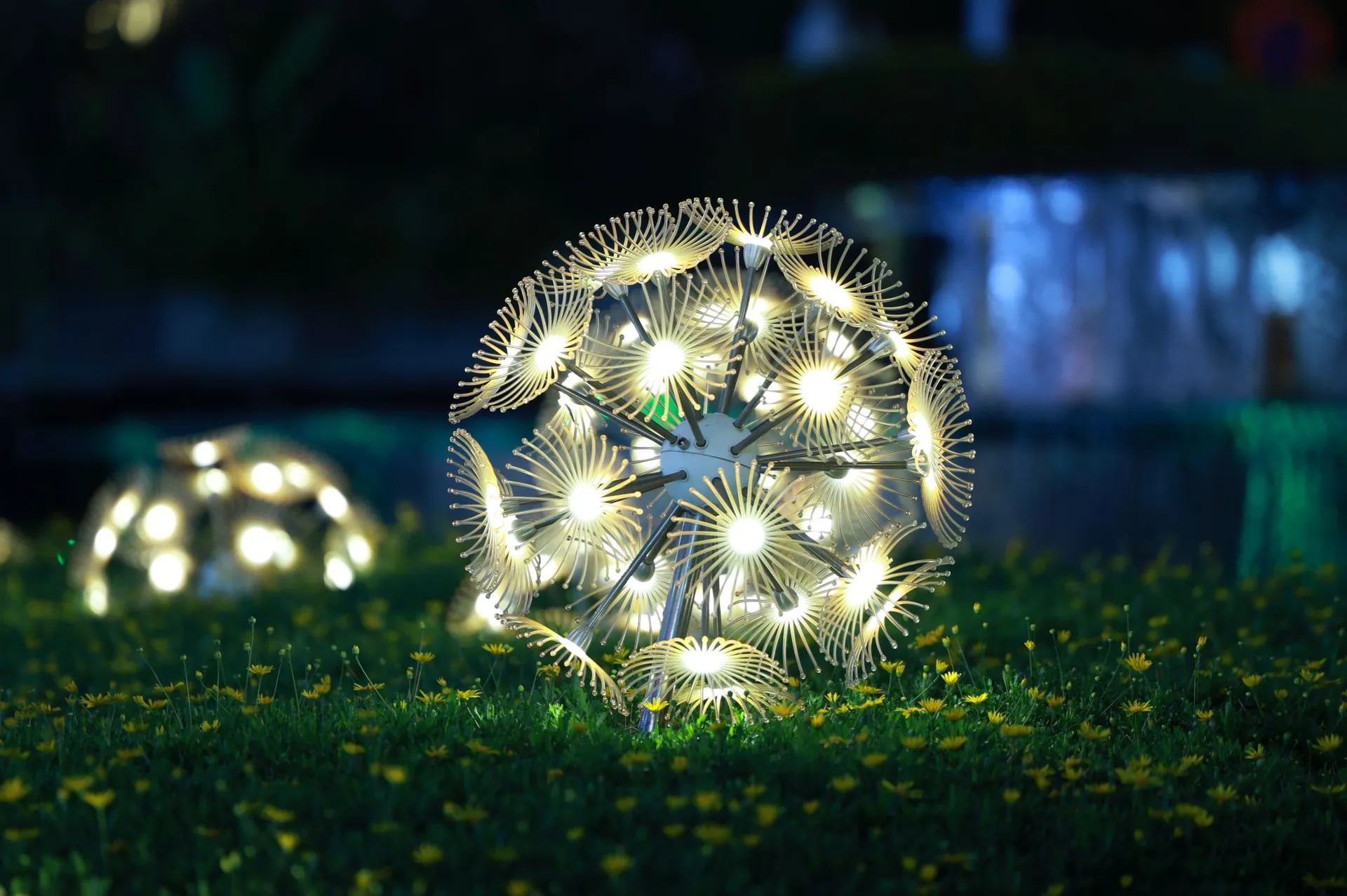
Sculptural accents
A single decorative fixture can become a night-time focal point, especially on an open lawn where there is nothing else to light.
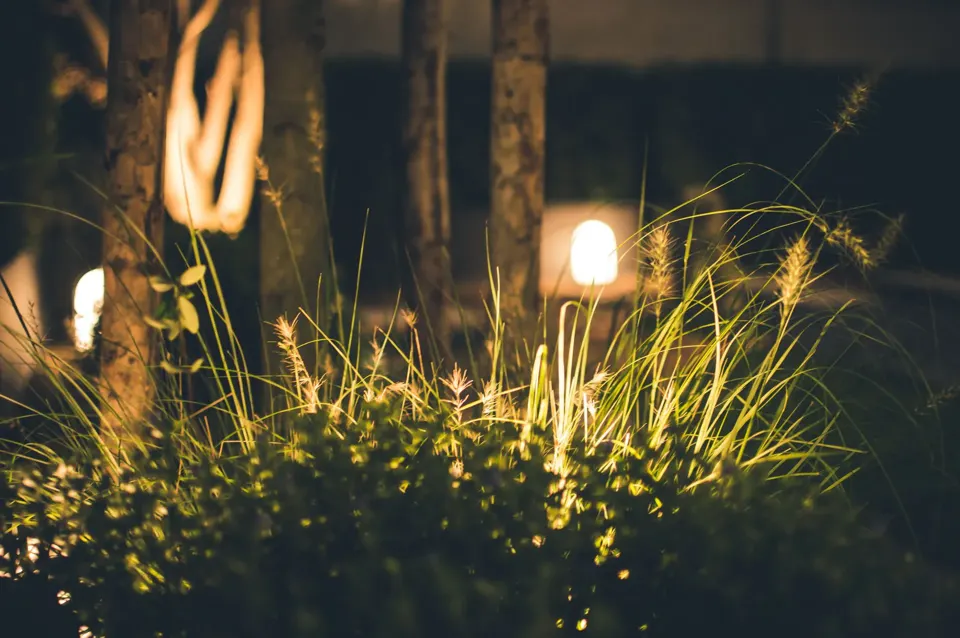
Grazing ornamental grasses
Low, close fixtures skim light across texture so grasses and foliage glow against darkness.
Canopy uplighting
Two or three fixtures around a live oak add volume. One uplight on a narrow pine adds height.
Staggered path lights
Alternating pools of light lead the eye to the door without the runway look.
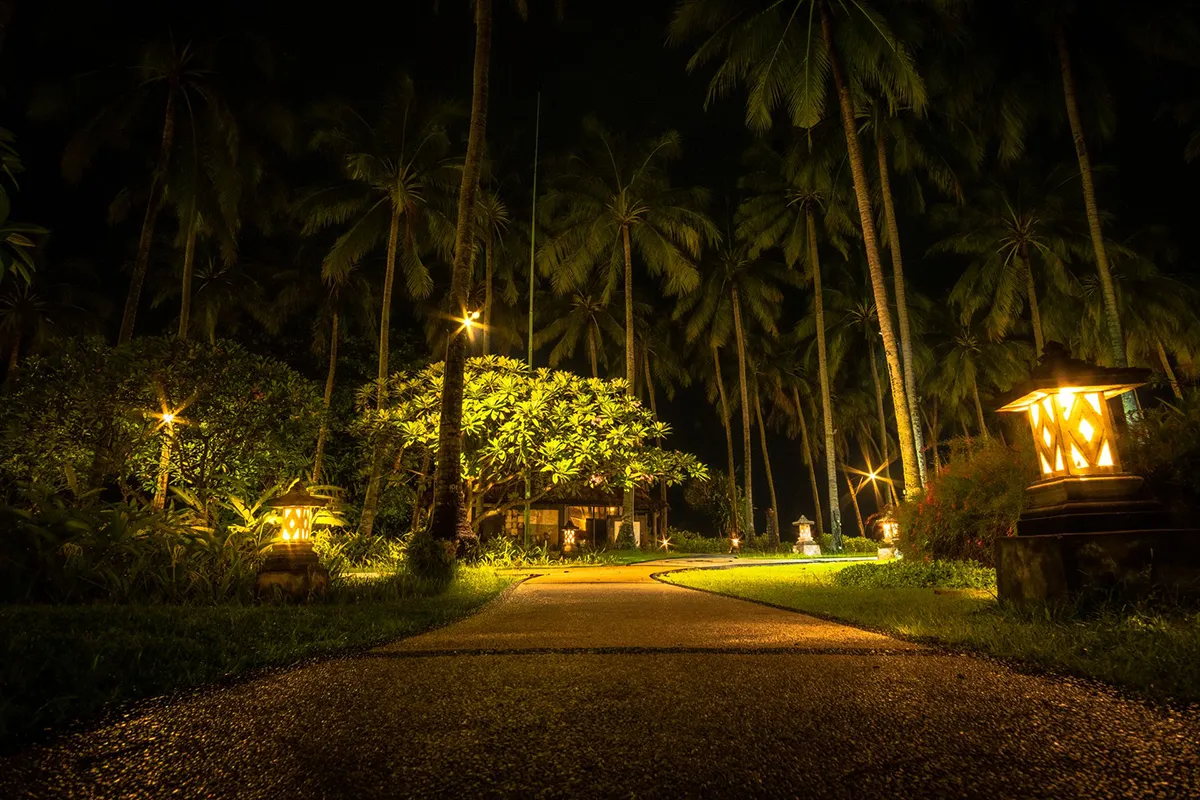
Lanterns, palms & moonlight
Decorative lanterns mark the route while uplit palms and canopy light frame the view at the end of the path.
Pergola & string lighting
Warm 2200K bulbs and soft downlight make patios comfortable for conversation, not interrogation.
Layered design
All four layers, balanced. Each one does a job and none overwhelms the others.
Foreground, middle, background
Lighting at three depths makes even a small yard feel deeper from inside the house.
Match the light to the architecture
Traditional brick
Warm 2700K uplighting on piers and between windows, grazing on columns, and soft path lights. Red and orange brick come alive under warm light.
Stone & Hill Country
Grazing light close to textured limestone or Austin stone emphasizes depth and shadow. 3000K often keeps pale stone crisp without going cold.
Modern farmhouse
Clean, symmetrical washes on board-and-batten, downlights from eaves, and minimal fixtures. Restraint suits the style.
Mediterranean & stucco
Wide, even washes avoid scalloping on smooth stucco. Palms, arches and courtyards are natural focal points.
Ten ideas worth stealing
- Light the house and the biggest tree first; they define the scene from the street.
- Graze columns from directly below for a crisp vertical line.
- Moonlight a live oak from inside the canopy for dappled shadows on the lawn.
- Stagger path lights instead of lining both sides.
- Put step lights in risers or walls rather than relying on overhead light.
- Silhouette a sculptural plant by washing the wall behind it.
- Light the view from inside: what you see from the living room window matters.
- Use warm 2200K string lights over seating, and keep other layers 2700K–3000K.
- Zone the backyard separately so it can stay off until you use it.
- Leave some darkness. Contrast is what makes a lit feature special.
Learn the vocabulary in 12 landscape lighting techniques, choose colors with the color temperature explorer, or let Spring Landscape Lighting design it for you.
Ready to see your home in a new light?
Let’s design an outdoor space you’ll love after dark.