
Tree & Garden Lighting in Spring, TX
Showcase live oaks, pines and planting beds with uplighting, moonlighting, silhouetting and soft accent light.
On many properties around Spring, the most impressive feature is not the house. It is a spreading live oak, a stand of loblolly pines or a row of crape myrtles that took decades to grow. After sunset, all of that disappears unless it is lit. Spring Landscape Lighting designs tree lighting in Spring, TX that gives mature trees and planting beds depth and presence at night, using a measured mix of uplighting, moonlighting, silhouetting and soft accent light. Done well, it makes a yard feel larger, calmer and more finished.
What's included
- An assessment of each tree's canopy, trunk structure and viewing angles from the street, driveway, windows and patio.
- Uplighting and canopy lighting for live oaks, pines, magnolias, cedar elms, palms and ornamental trees.
- Moonlighting fixtures mounted high in mature trees to cast soft, dappled downlight over lawns, beds and paths.
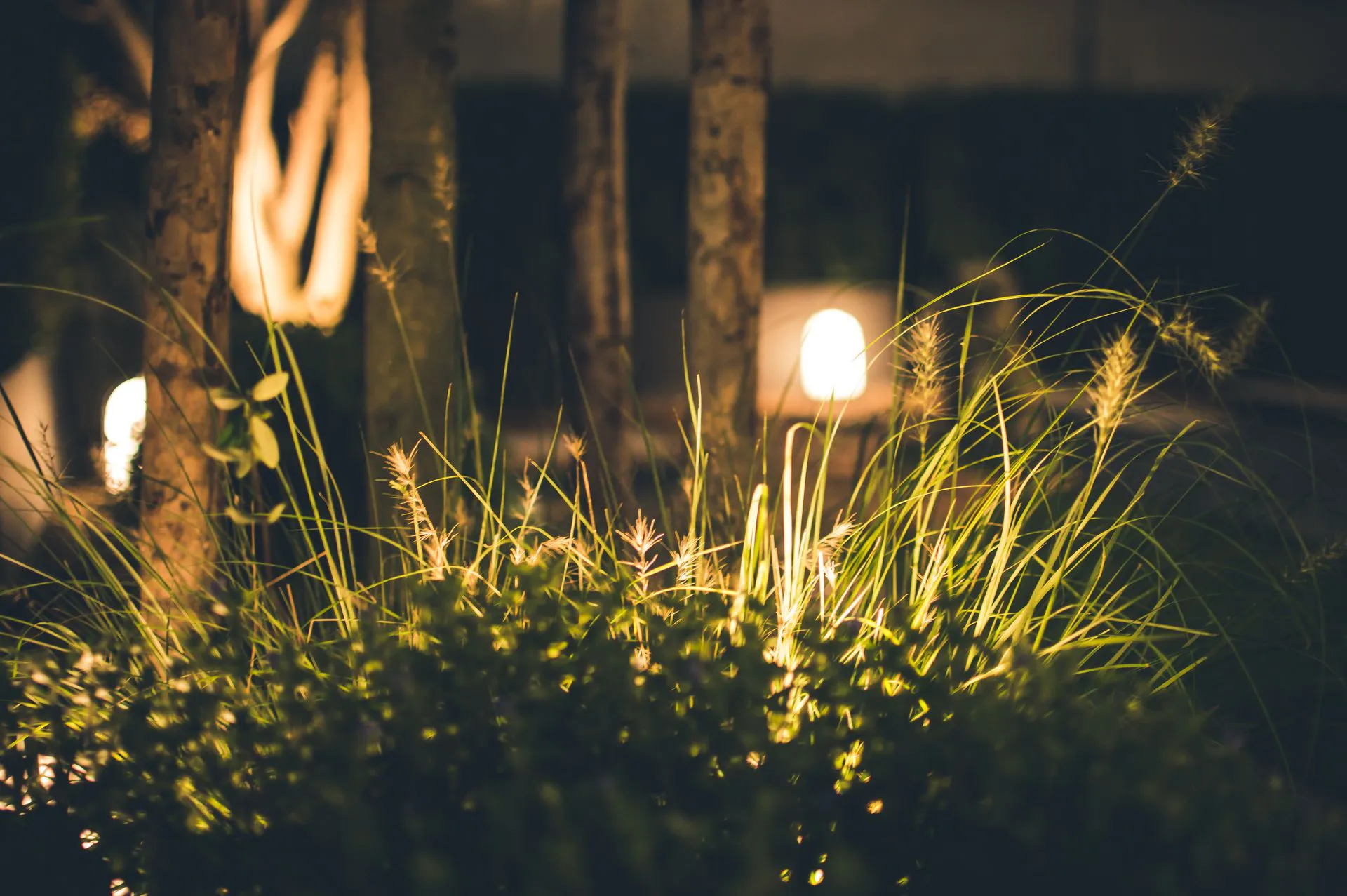
- Accent lighting for planting beds, specimen shrubs, ornamental grasses, boulders, fountains and garden structures.
- Tree-safe mounting hardware, flexible wiring with slack for growth, and fixtures zoned separately from the house.
Techniques for trees and gardens
Uplighting
Two or three fixtures around a large tree, cross-lighting the trunk and canopy so it reads as three-dimensional instead of a flat cutout.
Moonlighting
Fixtures mounted 20 to 40 feet up, aimed down through branches. The leaf shadows on the ground look like natural moonlight.
Silhouetting
Lighting a wall or fence behind a sculptural plant, such as a palm or a Japanese maple, so its outline stands out in dark relief.
Bed accents
Low, shielded fixtures that pick out texture in grasses, agaves and boulders without lighting the whole bed evenly.
Fixture output depends heavily on the tree. A 15-foot crape myrtle might need a single 3 to 5 watt LED with a medium beam. A 60-foot pine may need narrow-beam fixtures in the 8 to 12 watt range to reach the canopy at all. We generally use 2700K to 3000K for trees: warm enough to feel natural, but not so amber that green foliage looks muddy. Our tree uplighting guide goes deeper into placement, fixture count and beam angles by species.
Designing for Spring, TX landscapes
Live oaks
Live oaks spread wider than they are tall, and their twisting limbs are the main event. We light them from multiple sides, sometimes with fixtures set well out under the canopy aimed back toward the trunk, so the structure of the branches shows. Large oaks are also the best platform for moonlighting.
Loblolly pines
Tall, straight trunks with foliage high above. Lighting only the trunk can look like a row of telephone poles. Narrow beams that reach the lower canopy, combined with restraint about how many pines get lit, keep the effect natural.
Palms and crape myrtles
Palms look best with a fixture close to the trunk that grazes up into the fronds, or with silhouetting. Crape myrtles have beautiful smooth bark that rewards close, low-wattage uplighting, especially in winter when the branches are bare.
Growth, roots and storms
Plants grow fast here. Beds fill in within a season, and trees add height and spread every year. We leave service loops in the wire, use adjustable fixtures and avoid trenching through major root zones. In-tree fixtures are mounted with hardware designed to allow for growth, and we plan wire routes with storm damage and limb loss in mind.
Common mistakes we avoid
- One fixture per tree, aimed straight up. It lights one side and leaves the tree looking flat. Two or more fixtures from different angles create depth.
- Lighting every tree. Choosing the best two or three trees and leaving others in shadow creates far more drama than lighting all of them evenly.
- Glare toward the patio or street. Uplights placed in the open can shine straight into the eyes of people sitting outside. We use shielded fixtures, glare guards and careful aiming.
- Cool white on foliage. Very cool light can make leaves look artificial, and mixing cool and warm across trees looks inconsistent.
- Strapping fixtures with wire or nails. Wrapping wire around a trunk can girdle it as the tree grows. We use proper tree-mount hardware.
Light two trees beautifully and the darkness around them becomes part of the design.
Bringing it together
Tree lighting balances the brightness of the home and gives the landscape a sense of depth. It pairs naturally with architectural lighting, and moonlighting from large trees often provides the gentlest light for pathways and driveways. Out back, trees around a pool or patio can frame the space with patio and pool lighting. If you want to compare how different color temperatures look on foliage, try the color temperature explorer. Spring Landscape Lighting can show you how your own trees respond during a nighttime walkthrough.
Frequently asked questions
How many lights does a large live oak need?
Most mature live oaks look best with at least two to four fixtures from different angles, sometimes more for very wide canopies. A single uplight tends to light one side and make the tree look flat.
Is it safe to mount lights in a tree?
Yes, when done with proper tree-mount hardware that allows for growth and with wiring run so it does not wrap or girdle the trunk. We avoid nails through wire and check in-tree fixtures periodically.
What is moonlighting?
Moonlighting places fixtures high in a tree, aimed downward through the branches. The light casts soft leaf and branch shadows on the ground below, similar to natural moonlight, and is a gentle way to light lawns and paths.
Will tree uplighting bother my neighbors?
It should not if fixtures are shielded and aimed into the canopy rather than past it. We keep beams within the tree and avoid aiming toward neighboring windows or the street.
How often do tree fixtures need adjusting?
Plan on checking them once or twice a year. Fast growth on the Gulf Coast changes canopies and beds quickly, and small adjustments keep the effect looking intentional.
Six steps from first call to final glow
Every tree & garden lighting project follows the same clear, collaborative process.
- 01
Consultation
We talk through your goals, budget and how you actually use each outdoor space after dark.
- 02
Property walkthrough
We study architecture, trees, beds, viewing angles, power access, drainage and irrigation.
- 03
Custom lighting plan
Techniques, fixture locations, beam spreads, color temperature, zones and controls, all mapped out.
- 04
Clear proposal
A straightforward scope and recommendation for the planned system, with no surprises.
- 05
Clean installation
Professional low-voltage components, concealed wire, protected beds and a tidy site.
- 06
Night review
We return after dark to fine-tune aim, brightness and glare until the balance is right.
Pair it with these services
The best results come from layering techniques across the whole property.
Architectural Lighting
Bring dimension to brick, stone, columns, rooflines and entry features with carefully placed uplights, washes and grazing light.
Explore 02Pathway & Driveway Lighting
Low-glare light along walks, steps and driveways that makes arrivals safer and feels welcoming, never like a runway.
Explore 03Patio & Pool Lighting
Comfortable light for patios, kitchens, pergolas, pools and fire features, so your outdoor rooms stay open after dark.
Explore
Ready for tree & garden lighting that looks intentional?
Let’s design an outdoor space you’ll love after dark.