
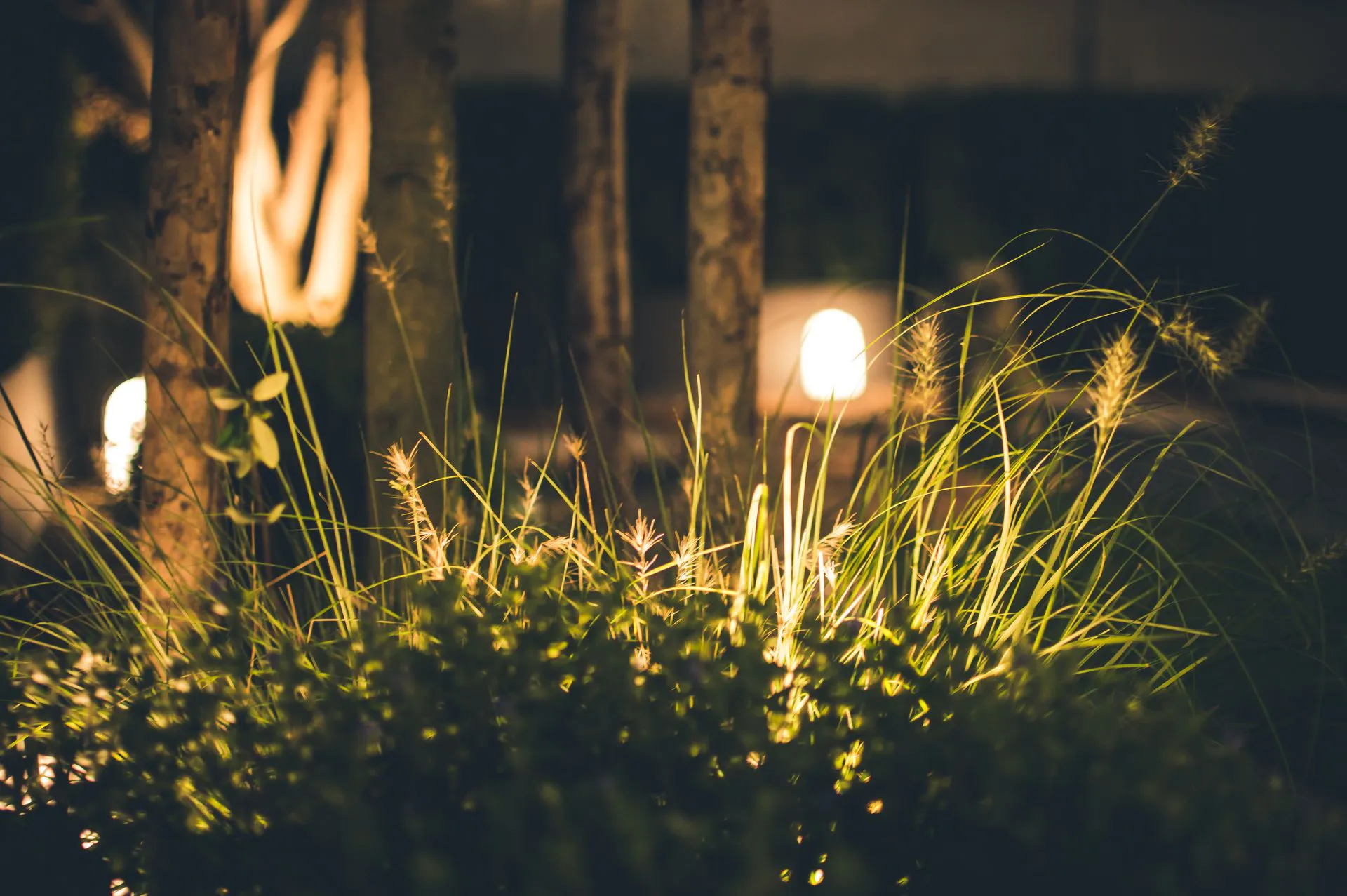
Pathway & Driveway Lighting in Spring, TX
Low-glare light along walks, steps and driveways that makes arrivals safer and feels welcoming, never like a runway.
Path and driveway lights do the most practical work in a landscape lighting system, and they are also the easiest to get wrong. Too many fixtures in a straight line and the front walk looks like an airport runway. Too few and guests step through dark gaps. Spring Landscape Lighting designs pathway lighting in Spring, TX around how people actually move across a property: from the car to the door, down the side yard to the gate, across the patio steps. The result is light you notice for its comfort, not for the fixtures.
What's included
A pathway and driveway project covers more than the walk itself. We look at the full arrival sequence and every change in level along it.
- Front walks, side-yard paths, garden paths and stepping-stone routes.
- Steps and risers, including brick and stone stairs, landings and retaining-wall steps.
- Driveway edges, entry pillars, turnarounds and the transition from street to drive.
- Gates, mailbox areas and the route to trash and side-yard storage, which homeowners use more often than they expect.
- Low-voltage LED fixtures, properly sized wire and transformer capacity, zoning and timer setup.
Fixtures and techniques
Shielded path lights
Hat-style fixtures, typically 18 to 26 inches tall, that cast a soft pool of light downward with the lamp hidden from view.
Step and wall lights
Small louvered fixtures set into risers or retaining walls, so each tread is visible without a single bright point at eye level.
Downlighting from trees
Fixtures mounted in a live oak or on an eave that wash a walk or driveway from above, often the most natural light of all.
Driveway markers
Low, well-shielded accents or pillar lights that define the edge of the drive without lining it like a landing strip.
Most of our path fixtures run at about 2 to 4 watts each as LEDs. That is enough. A walkway needs only a fraction of the light a facade does, and lower output reduces glare and keeps the eye adjusted to the dark beyond the path. We usually stagger fixtures from side to side rather than placing them in pairs, which gives continuous coverage with fewer lights. Our detailed guide on how far apart path lights should be covers spacing, beam spread and fixture height, with typical spacing landing somewhere around 8 to 15 feet depending on the fixture and the path.
Designing for Spring, TX properties
St. Augustine lawns and edging
St. Augustine grass spreads quickly, and its runners creep over walk edges and around fixture stems. Mowers and string trimmers are the leading cause of broken path lights we see. We set fixtures back from the mow line, inside planting beds where practical, and choose sturdy cast or brass stems instead of thin composite ones.
Long driveways and estate lots
Some homes around Spring, Klein and Gleannloch Farms sit at the end of long drives. Lining a 150-foot driveway on both sides is expensive and rarely attractive. We prefer marking the entry, any curves or grade changes, and the arrival court, then letting the rest stay dark or receive soft downlight from trees.
Rain, drainage and soil movement
Heavy Gulf Coast rain moves mulch and soil, and expansive clay shifts through wet and dry seasons. Fixtures are set on stakes long enough to stay plumb, connections are sealed, and wire is buried at a depth that protects it from edging tools while leaving slack for the inevitable move.
Neighbors and HOAs
Driveway lighting sits close to the street and, in many neighborhoods, close to a neighbor's windows. Shielded fixtures and modest output keep light where it belongs, which also tends to satisfy HOA expectations about tasteful exterior lighting.
Common mistakes we avoid
- The runway. Matched pairs of path lights on both sides of a straight walk. Staggering and mixing in downlight solves it.
- Exposed lamps. If you can see the light source as you walk, it is glare. Every path fixture we use is shielded.
- Overlighting. Bright path lights make the rest of the yard look darker, which is the opposite of what you want for comfort and home security.
- Ignoring the steps. Steps need their own light. Path fixtures placed beside a staircase rarely light the treads well.
- Flimsy fixtures in high-traffic spots. Corners of the drive, mailbox areas and pool-equipment paths get bumped. Fixture choice and placement account for that.
A good path light shows you the ground, not the fixture.
Working with the rest of your lighting
Pathway lighting is the quiet layer that connects everything else. It should feel softer than architectural lighting on the facade and work alongside tree and garden lighting, which often provides the downlight that makes paths feel natural. Many Spring Landscape Lighting clients put paths on their own zone with smart controls, so they can run until bedtime and switch off while accent lighting stays on a little longer, or the reverse. If you want a rough fixture count before talking to us, try the fixture estimator.
Frequently asked questions
How far apart should path lights be?
Typical spacing falls around 8 to 15 feet, staggered from side to side, but it depends on the fixture height, beam spread and how wide the path is. The aim is overlapping pools of light without dark gaps or a uniform runway look.
Do I need to light my entire driveway?
Usually not. Lighting the entry, curves, grade changes and the area where you park and walk to the door handles most of the practical need. Long driveways often look better with selective accents and downlight from nearby trees.
How do you keep path lights from getting hit by mowers?
We set fixtures back from the mow line, place them inside beds where possible, use sturdy metal fixtures and position them so string trimmers have room to work around them.
Are solar path lights a good alternative?
Solar lights are inexpensive but tend to be dim, inconsistent after cloudy days and short-lived in Texas heat. A low-voltage LED system costs more up front but delivers reliable, controllable light for many years.
Can step lights be added to an existing brick or stone staircase?
Often yes. Small fixtures can sometimes be cored into risers or side walls, or the steps can be lit from above or from the side. We evaluate the construction before recommending an approach.
Six steps from first call to final glow
Every pathway & driveway lighting project follows the same clear, collaborative process.
- 01
Consultation
We talk through your goals, budget and how you actually use each outdoor space after dark.
- 02
Property walkthrough
We study architecture, trees, beds, viewing angles, power access, drainage and irrigation.
- 03
Custom lighting plan
Techniques, fixture locations, beam spreads, color temperature, zones and controls, all mapped out.
- 04
Clear proposal
A straightforward scope and recommendation for the planned system, with no surprises.
- 05
Clean installation
Professional low-voltage components, concealed wire, protected beds and a tidy site.
- 06
Night review
We return after dark to fine-tune aim, brightness and glare until the balance is right.
Pair it with these services
The best results come from layering techniques across the whole property.
Architectural Lighting
Bring dimension to brick, stone, columns, rooflines and entry features with carefully placed uplights, washes and grazing light.
Explore 02Tree & Garden Lighting
Showcase live oaks, pines and planting beds with uplighting, moonlighting, silhouetting and soft accent light.
Explore 03Patio & Pool Lighting
Comfortable light for patios, kitchens, pergolas, pools and fire features, so your outdoor rooms stay open after dark.
Explore
Ready for pathway & driveway lighting that looks intentional?
Let’s design an outdoor space you’ll love after dark.