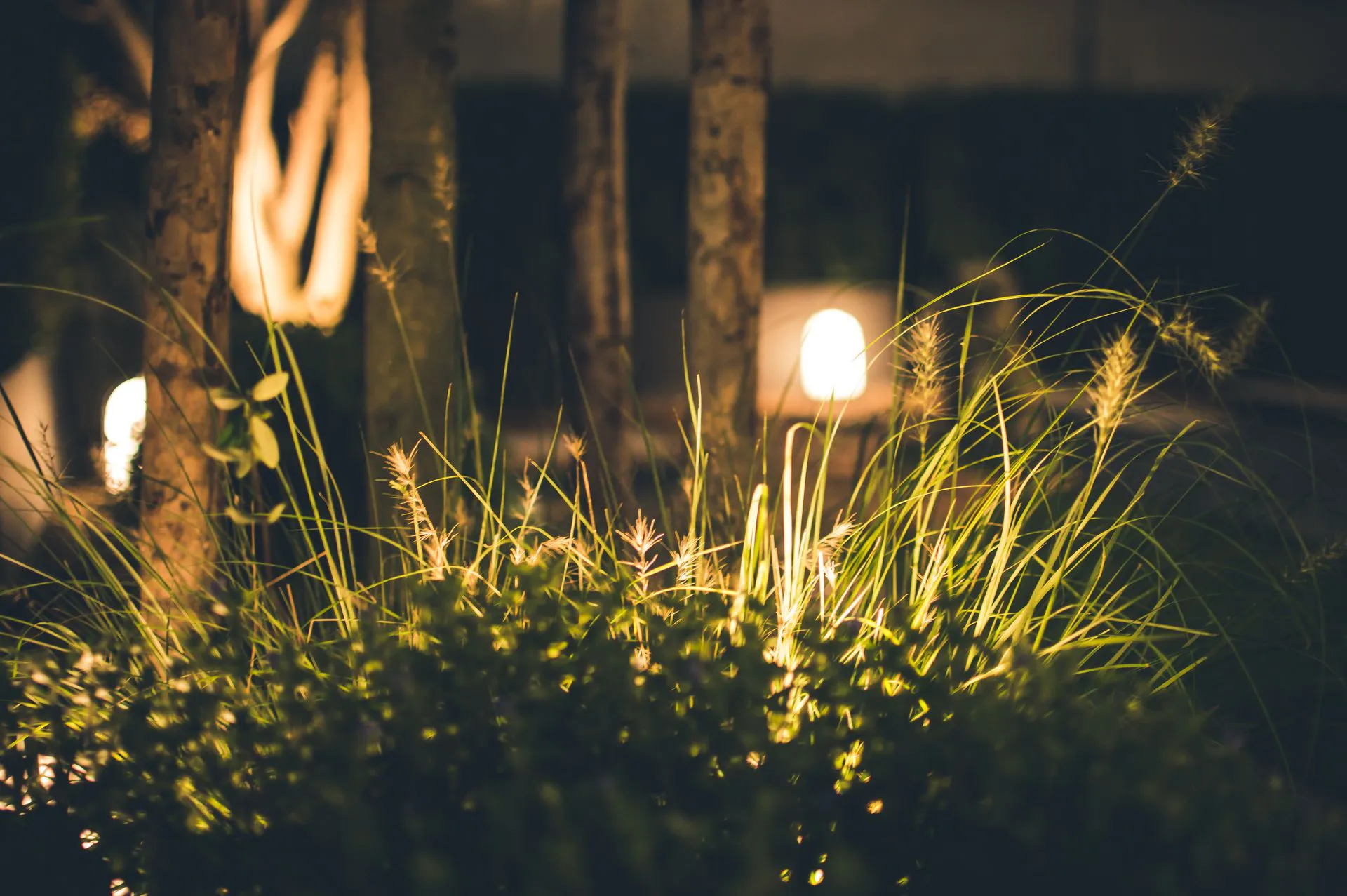
Landscape lighting can make a home easier to watch over at night: you can see who is at the door, walk to the car without stumbling, and check the side yard from a window. What it does not do is turn a house into a fortress just by being bright. In fact, the floodlit approach many homes default to often makes things harder to see. Good security lighting is about visibility, not wattage.
What lighting can and cannot do
Research on outdoor lighting and crime is genuinely mixed. Some studies of street lighting have found reductions in crime, others have found little effect, and results depend heavily on the setting. There is far less rigorous research on residential landscape lighting specifically. So be wary of anyone quoting a precise percentage for how much lights will protect your home.
What is well established is more practical. Lighting helps people see, it removes the deep shadows where someone could stand unnoticed, it makes a home look lived in, and it gives cameras a usable image. The idea of "natural surveillance," a core part of crime prevention through environmental design, is simply that spaces people can see into are less inviting to anyone who would rather not be seen.
The goal is not to make the yard brighter. It is to leave nowhere convenient to hide.
Visibility vs glare
Glare is the enemy of security lighting. A bare floodlight pointed outward creates a bright spot surrounded by darker shadows, and anyone standing behind that light is harder, not easier, to see. It also shines into the eyes of the person looking out from the house, or into the camera lens.
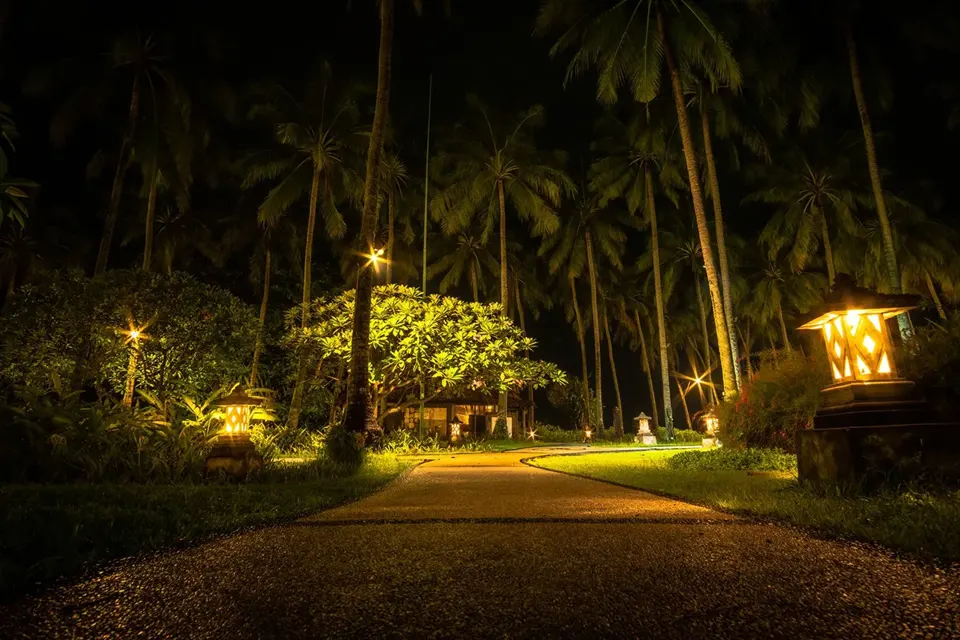
Low, even, shielded light does the opposite. When light lands on surfaces, walls, paths and plantings, instead of shining at people, eyes adjust properly and you can see further into the yard.
Floodlight approach
One or two very bright fixtures. Harsh contrast, deep shadows beyond the beam, glare toward windows and neighbors, washed-out camera footage.
Layered approach
Many lower-output, shielded fixtures. Even coverage, fewer hiding spots, comfortable for residents, clearer camera images, and the house still looks good.
Where to put the light
Focus on the places people actually approach or could linger.
- Entry points. Front door, back door, garage, side gates. Faces at the door should be clearly visible from inside and on a doorbell camera. Soft downlighting from an eave or a pair of well-placed fixtures works better than one glaring wall pack.
- Paths and the driveway. Shielded path and driveway lighting handles safety first: steps, edges and trip hazards. It also means anyone walking up is lit.
- Side yards. These narrow strips between houses are often the darkest part of a property and the most common route to a back gate. A few low fixtures or a wall-wash on the fence is usually enough.
- Dark corners and large shrubs. Dense foundation shrubs, hedges and the space behind a big live oak trunk are classic hiding spots. Uplighting the shrub or the trunk removes the shadow. Tree and garden lighting does double duty here.
- Windows. Gently washing the façade around ground-floor windows, rather than aiming at the glass, means no one can stand at a window unseen.
Motion zones and timers
Constant light and motion-triggered light do different jobs, and the best systems use both.
- Timed landscape lighting runs on a schedule from dusk to a set hour, keeping the property consistently visible and making the home look occupied.
- Motion-triggered zones brighten specific areas, a side yard, a back gate, the driveway, when something moves. The sudden change draws attention, and you are not lighting empty areas all night.
- Varied schedules while traveling. A house that goes dark at exactly the same minute every night looks unattended. Smart lighting controls let you vary times, switch zones from your phone and coordinate with indoor lights.
A useful pattern is to keep architectural and garden accents on until around midnight, leave low path and entry lighting on later, and let motion zones handle the rest of the night. The sunset timer planner helps you work out a schedule.
Camera-friendly lighting
Most home security cameras switch to infrared night mode in darkness, which gives grainy black-and-white footage. Steady, even ambient light can let many cameras stay in color mode and capture more detail, but only if the light is placed with the camera in mind.
| Do | Avoid |
|---|---|
| Light the area the camera watches, from the side or behind the camera | Fixtures that shine directly into the lens |
| Even light across the scene | One hot spot with deep shadow around it |
| Downlighting at doors so faces are lit | Backlighting that turns visitors into silhouettes |
| Warm white (2700K–3000K) with good color rendering | Assuming harsher, bluer light is automatically better |
After installation, check your camera feeds at night and adjust aiming. Small changes make a big difference. Our color temperature guide explains why warm light still works well for visibility.
Neighbors, light trespass and HOAs
Security lighting is the most common source of neighbor complaints, nearly always because of glare and light spilling across a property line or into a bedroom window. Shielded fixtures aimed down or at surfaces solve most of it.
- Aim fixtures inward and downward at the property edges.
- Use glare shields and fixtures with recessed lamps.
- Keep output modest; you need less light than you think once shadows are gone.
- Check your HOA's deed restrictions or architectural guidelines. Many communities around Spring, Klein and The Woodlands have rules about exterior lighting, and some require approval for changes. Restrained landscape lighting is usually far less contentious than floodlights.
A layered approach
The best security lighting is simply good landscape lighting with a few deliberate additions. Spring Landscape Lighting typically thinks about it in layers:
- Safety layer. Paths, steps, driveway and entries.
- Architectural layer. Soft washing of the façade so windows and doors are visible. See our architectural lighting work.
- Landscape layer. Trees, shrubs and beds lit to remove deep shadows.
- Response layer. Motion-activated zones for side yards, gates and the back of the property.
- Control layer. Timers, zones and app control so the house looks occupied whether you are home or not.
Lighting works best as one part of a broader approach that also includes locks, cameras and simply knowing your neighbors. Done well, it makes the home safer to move around, easier to watch and more pleasant to come home to. To see how layers might look on your house, try the lighting visualizer or request a consultation.
Frequently asked questions
Does landscape lighting deter burglars?
Research on outdoor lighting and crime is mixed, so no one can promise a specific reduction. What lighting reliably does is remove hiding spots, improve visibility for residents and neighbors, make the home look occupied and help cameras record usable footage.
Are floodlights better than landscape lighting for security?
Not necessarily. Bright floodlights create glare and deep shadows that can make it harder to see. Layered, shielded landscape lighting usually gives more even visibility with less glare.
Should security lights stay on all night?
Many homeowners keep low path and entry lighting on through the night or until late, turn decorative lighting off around midnight, and rely on motion-triggered zones for side yards and gates.
How do I light my yard for security cameras?
Light the area the camera watches from the side or behind the camera, keep light even, and never aim fixtures into the lens. Check the camera feed at night after installation and fine-tune aiming.
Will security lighting bother my neighbors?
It can if fixtures shine across the property line. Shielded fixtures aimed down or at surfaces, modest brightness and a sensible schedule prevent most problems. Check HOA rules before adding exterior lighting.

Spring Landscape Lighting
Landscape lighting designers serving Spring, Klein, The Woodlands and North Houston. Questions about your property? Get in touch.