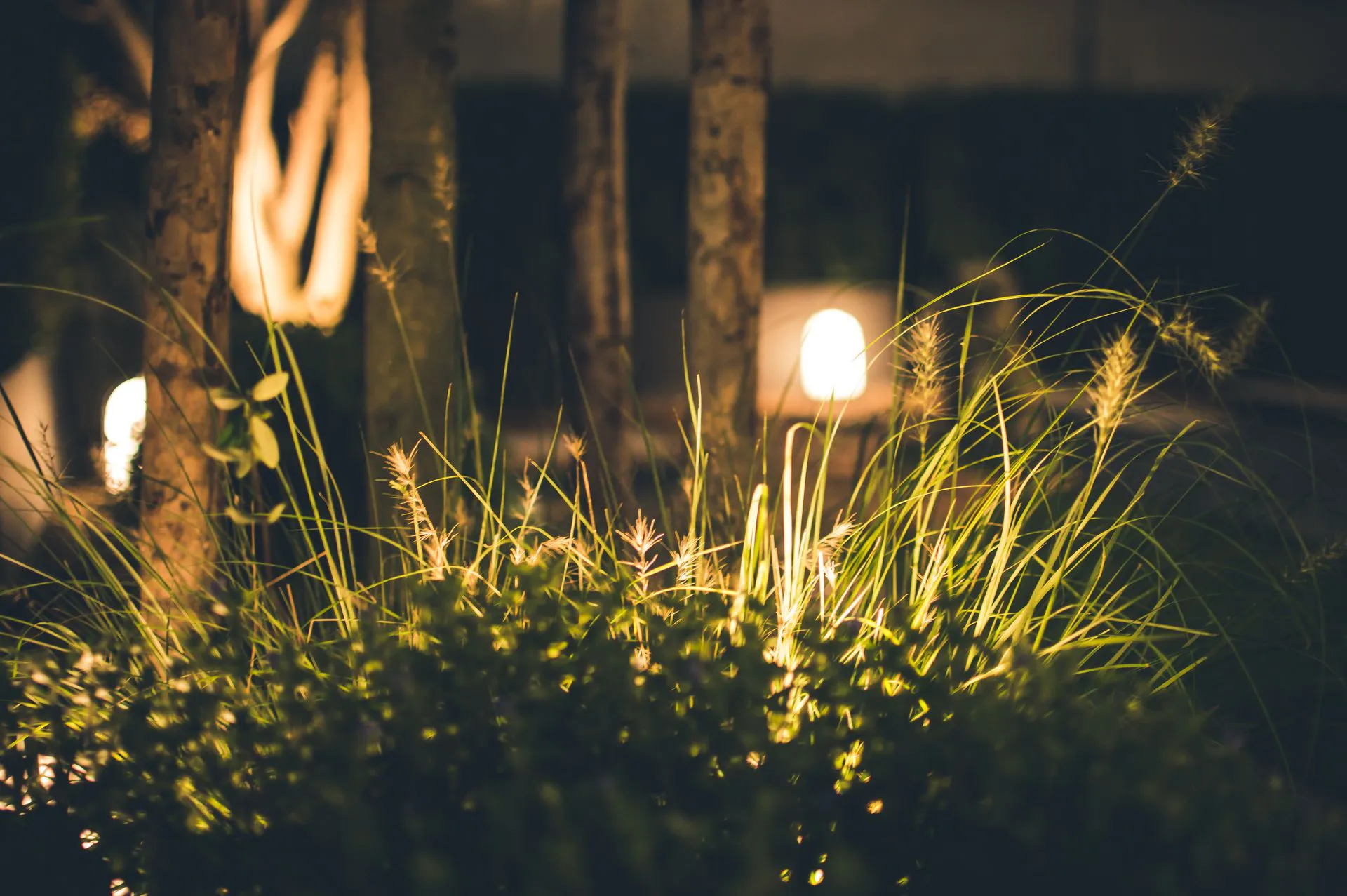
Outdoor porch lights do more work than almost any other fixture on a house. They greet guests, light the lock and the top step, make the house number readable from the street and set the tone of the whole front elevation after dark. Because they sit right at eye level next to the front door, they are also the fixtures people notice first when they are the wrong size, too bright or the wrong color. A little planning goes a long way.
The quick answer
For most homes, the best outdoor porch lights are warm white (2700K to 3000K), moderately bright, shielded or frosted so the bulb is not glaring, and sized to the door. A common guideline is that a single fixture should be roughly one-third the height of the door, and a pair flanking the door should each be roughly one-quarter of the door height. Mount wall lanterns so their center sits a little above eye level, use a wet-rated fixture anywhere rain can reach it, and put the light on a photocell or timer so it is never left blazing all day. Then let low-voltage landscape lighting handle the walk, the plants and the facade, so the porch light does not have to light everything on its own.
What a porch light needs to do
It helps to think about the jobs before thinking about styles. A good porch light handles four things at once:
- Safe arrival. It lights the landing, the top step and the door hardware so nobody fumbles for keys or misses an edge.
- Recognition. It lets you see a visitor's face through the door glass or a video doorbell, and it lets guests and drivers find the right house.
- Welcome. A soft, warm glow at the door reads as "someone lives here and is expecting you." A harsh white glare reads more like a parking lot.
- Architecture. The fixtures themselves are jewelry for the front of the house. Their size, finish and shape should match the style of the home, whether it is a brick traditional in Champion Forest or a newer modern farmhouse in Gleannloch Farms.
What a porch light should not try to do is light the whole yard. When people swap in a very bright bulb to reach the driveway or the flower beds, the result is glare at the door and dark shadows everywhere else. Those areas are better served by dedicated pathway and driveway lighting or, for wide utility areas, by properly aimed outdoor flood lights.
Types of outdoor porch lights
Outdoor porch lights come in a handful of basic forms. Many front entries use two of them together, such as a hanging lantern under a tall portico plus a pair of wall lanterns at the door.
| Type | Where it works best | What to watch for |
|---|---|---|
| Wall lantern (sconce) | Beside the front door, garage entry door or back door; the most common choice | Size relative to the door; exposed bulbs can glare at eye level |
| Flush or semi-flush ceiling light | Covered porches with standard ceiling height | Can look small and flat if the porch is deep or tall |
| Hanging lantern or pendant | Tall porticos, two-story entries and deep covered porches | Needs enough clearance below; wind can swing light fixtures on chains |
| Recessed downlight | Clean, modern porch ceilings and soffits | Needs a fixture rated for damp or wet locations; aim spacing so light reaches the door |
| Post or pier light | At the bottom of steps or at the end of a front walk | Needs a buried power feed; keep it in scale with the house |
If your porch is covered and the fixture is fully protected from rain, a damp-rated fixture is generally acceptable. If the fixture is on an exposed wall where wind-driven rain hits it directly, look for a wet-rated listing. Gulf Coast storms push rain sideways, so "sheltered" fixtures often get wet.
How to size outdoor porch lights
The most common mistake with outdoor porch lights is buying fixtures that are too small. A lantern that looks large in the box often looks tiny once it is on a two-story brick facade and seen from the street. Designers use a few rules of thumb as a starting point:
| Setup | Common guideline | Example with an 80-inch door |
|---|---|---|
| One wall lantern beside the door | About one-third of the door height | Roughly 24 to 27 inches tall |
| A pair of wall lanterns flanking the door | About one-quarter of the door height each | Roughly 18 to 20 inches tall |
| Hanging lantern in a tall entry | Scaled to the space, with clearance below for the door and traffic | Often large enough to read from the curb |
Treat these as starting points, not rules. Tall doors, sidelights, transom windows and heavy stone or brick surrounds all call for larger fixtures. A simple way to test scale is to cut cardboard to the size of the fixture you are considering, tape it to the wall and look at it from the street. If it disappears, go bigger.
Mounting height and placement
For wall lanterns, a common recommendation is to place the center of the fixture slightly above eye level, which often works out to somewhere around 66 inches above the porch floor. Another way to think about it is that the fixture should sit in the upper third of the door, not at the very top of the trim and not down by the handle. At that height the light falls on faces and door hardware without the bulb staring straight into anyone's eyes.
- For a pair, mount both at the same height and keep them equally spaced from the door trim.
- For a single fixture, put it on the latch side of the door so it lights the lock.
- Leave a few inches of clearance from trim, shutters and gutters so the fixture does not look crammed in.
- For hanging lanterns, keep the bottom well above the top of the door swing and comfortably above head height.
Brightness, glass and color temperature
Porch lights do not need to be bright. They are viewed up close, and the eye adjusts quickly at night. Many lighting guides suggest a few hundred lumens up to roughly 800 lumens for a typical entry fixture, with the lower end usually plenty when the landscape lighting already lights the walk.
The glass matters as much as the bulb. Clear glass with an exposed bulb shows every bit of glare, which is why many people end up with porch lights they cannot stand to look at. Seeded, frosted, ribbed or water glass softens the source. Fixtures that direct light down, such as barn styles and shielded modern cylinders, are naturally lower-glare and friendlier to neighbors and the night sky.
Color temperature is where most porch lights go wrong. Warm white in the 2700K to 3000K range flatters brick, stone, wood doors and planting, and it matches the low-voltage LED landscape lighting most homeowners choose. Cool white at 5000K can look blue and clinical next to a warm facade. Our guide to warm white vs. cool white landscape lighting explains the difference, and the color temperature guide lets you compare them side by side.
The best porch light is the one you notice for its shape in daylight and barely notice for its glare at night.
Example fixtures and bulbs to compare
The products below are popular, widely reviewed examples to help you compare styles. Check dimensions against your own door before ordering, since many listings are smaller than they look in photos.
Traditional lanterns
For colonial, Craftsman and classic brick homes, a simple black lantern is hard to beat. The Designers Fountain Preston outdoor wall light is a long-running, highly reviewed example; note that it is listed at 8 inches, which suits a garage side door or a narrow secondary entry better than a main front door. For a more substantial look with water glass, the MAXvolador exterior wall lantern is another widely reviewed traditional style.
Modern and transitional styles
Modern farmhouse and contemporary homes often look best with clean cylinders or box shapes in matte black. The BesLowe modern black outdoor wall light is a popular example of that style. Pair it with a warm bulb so the black finish reads as crisp, not cold.
Utility and side doors
Back doors, garage service doors and side yards do not need decorative lanterns. A simple, sturdy fixture like the Design House jelly jar outdoor wall light is easy to keep clean and works well with a warm LED bulb. Some homeowners also like fixtures with a built-in outlet for seasonal decor or a porch fan, such as the dusk-to-dawn porch light with GFCI outlet. Adding an outlet still means 120-volt work, so have an electrician confirm the circuit and box are suitable.
Bulbs that switch themselves
If your fixture is open enough for a sensor to see daylight, a dusk-to-dawn bulb is the simplest control upgrade. The TORCHSTAR dusk-to-dawn LED A19 bulbs (2700K) are listed at 2700K, a warm white that keeps the porch in harmony with landscape lighting. Sensor bulbs work poorly inside fully enclosed or heavily frosted lanterns, because the sensor cannot see the sky.
Controlling outdoor porch lights
Few things look worse than a porch light glowing at noon, or a dark front door when guests arrive. There are three common ways to automate a porch light:
- Photocell. A sensor in the bulb, fixture or a separate switch turns the light on at dusk and off at dawn. It is simple, but it can be fooled by deep shade under a porch roof or by light from another fixture.
- Timer or smart switch. A programmable switch lets you set the light to turn on at dusk and off at a set hour, such as midnight. Many smart switches adjust for sunset automatically through the year.
- Motion add-on. Some homeowners keep the porch light at a low, steady level all evening and let a separate motion light handle the driveway or side yard. Our guide to outdoor motion sensor lights covers placement and settings.
If you also have landscape lighting, it makes sense to coordinate the schedules so the porch, the walk and the facade all come on together. Our smart lighting controls service covers astronomical timers, zones and app control for low-voltage systems.
Porch lights and landscape lighting together
A porch light by itself creates a bright spot in a dark facade. That contrast is what makes many homes look uninviting at night, even when the porch light is perfectly nice. The fix is layering.
Facade
Soft uplighting on columns, stone or brick ties the porch into the rest of the house. See our architectural lighting service for how this is done without glare.
Walk and steps
Low path lights or step lights guide guests from the driveway to the porch, so the porch light does not have to reach the street.
Planting and trees
Lighting a crape myrtle or a live oak near the entry adds depth and frames the front door.
House numbers
A small, well-aimed light on the address makes the home easy to find for guests and deliveries.
When these layers are in place, the porch light can drop to a lower, more comfortable level, and the whole front of the house reads as one composition. The lighting visualizer lets you switch layers on and off to see the difference. Layered light also helps the house feel lived-in and visible, which supports the points in our guide to landscape lighting for home security.
Heat, humidity, bugs and HOAs in Southeast Texas
Spring, Klein and The Woodlands are hard on outdoor fixtures. A few local considerations are worth keeping in mind when shopping:
- Finish and material. Humidity and heat wear down cheap finishes quickly. Powder-coated aluminum, solid brass and quality composite fixtures generally hold up better than thin painted steel. Expect any finish to need a gentle cleaning now and then.
- Insects. Porch lights attract moths, beetles and the geckos that follow them. Warmer, amber-leaning light is often reported to draw fewer insects than cool white. Fixtures with closed bottoms collect bugs, so open-bottom or easy-to-open designs are simpler to keep clean.
- Storms. Make sure the fixture is mounted solidly and sealed at the wall per the manufacturer's instructions, especially on walls that face the prevailing weather.
- HOA guidelines. Many neighborhoods around Spring have architectural guidelines that cover exterior fixture styles, finishes or color temperature. Check before replacing visible front fixtures.
Replacing a porch light safely
Swapping a porch light is one of the more common exterior updates homeowners take on, but it is 120-volt house wiring, not low-voltage landscape lighting. If you are not comfortable turning off the breaker, testing for power, checking that the electrical box is secure and weather-sealed, and making proper connections, hire a licensed electrician. The same goes for adding a new fixture location, a second lantern, a post light or an outlet.
A simple buying checklist
Before you order new fixtures, run through this list:
- Measure the door. Use the one-third or one-quarter guideline to set a target fixture height, then size up if the facade is tall or heavily detailed.
- Check the location rating. Choose wet-rated for exposed walls and damp-rated only where the fixture is fully covered.
- Pick warm light. Plan on 2700K to 3000K bulbs or integrated LEDs to match the house and the landscape lighting.
- Control the glare. Prefer seeded, frosted or shielded glass, or a downlight design, over a bare bulb behind clear glass.
- Plan the controls. Decide on a photocell, timer or smart switch before installation so the wiring and fixture choice support it.
- Look at the whole front. Consider how the porch light will work with path, facade and tree lighting, not just how it looks in the box.
If the porch is part of a larger plan for the front yard, it is worth getting a design before buying fixtures. A good plan sets the porch light's role, size and brightness alongside everything else, so nothing competes. You can request a free consultation to talk through your entry.
Frequently asked questions
What size outdoor porch lights should I get?
A common guideline is about one-third of the door height for a single fixture and about one-quarter of the door height for each fixture in a pair. Treat that as a starting point and go larger for tall doors, sidelights or heavy brick and stone surrounds.
How high should porch lights be mounted?
Many guides suggest placing the center of a wall lantern slightly above eye level, often around 66 inches above the porch floor, or in the upper third of the door. Check the fixture instructions and keep both fixtures in a pair at the same height.
What color temperature is best for a porch light?
Warm white between 2700K and 3000K suits most homes. It flatters brick, stone and wood and matches the warm low-voltage LED landscape lighting most homeowners choose. Cool white can look harsh next to a warm facade.
How many lumens does a porch light need?
Not many. A few hundred lumens up to roughly 800 is common for an entry fixture. If the porch light seems too dim, adding path and facade lighting usually works better than installing a much brighter bulb.
Do I need a wet-rated or damp-rated porch light?
Use a wet-rated fixture anywhere rain can hit it directly, such as an exposed wall. A damp-rated fixture is generally fine under a covered porch where it is protected from direct rain. In storm-prone areas, wet-rated is the safer choice.
Can I replace a porch light myself?
Porch lights run on 120-volt house wiring. If you are not experienced with turning off power, testing circuits and making weather-tight connections, hire a licensed electrician. A professional is also the right call for new fixture locations or outlets.

Spring Landscape Lighting
Landscape lighting designers serving Spring, Klein, The Woodlands and North Houston. Questions about your property? Get in touch.